




01
OVERVIEW
April 17, 2026
Cluttered UIs are out. Clean, focused, intentional design is in. Here's why the world's best products are stripping back and what it means for how we build interfaces today.
02
FULL ARTICLE
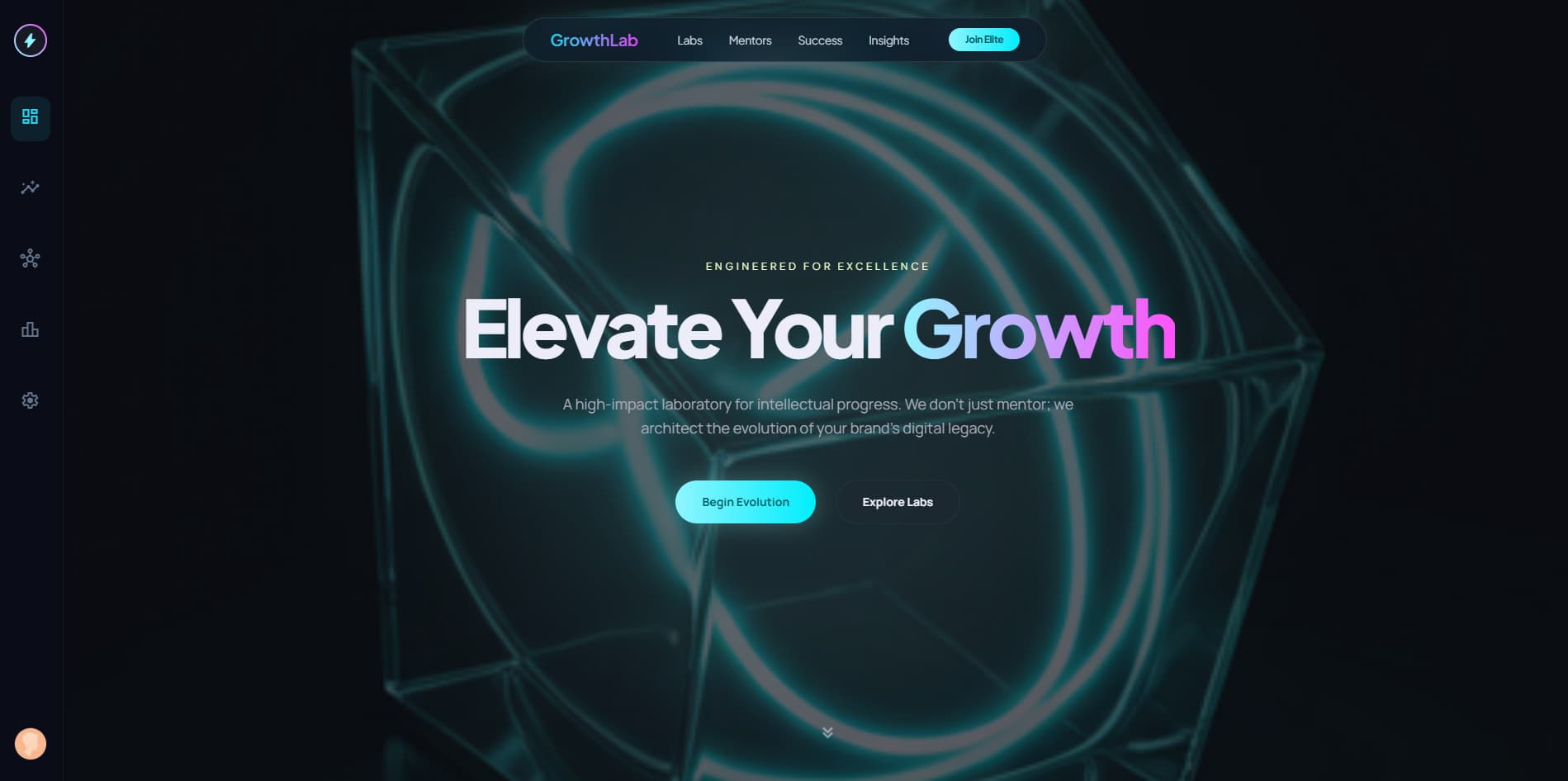
Open any award-winning app today Linear, Arc, Craft, Notion, Apple's own apps and you'll notice something immediately. There's less. Less clutter, fewer buttons, quieter colors, more breathing room. Minimalism in UI design isn't a trend anymore. It's a philosophy that's quietly become the default standard for serious products.
But why? And what does "minimal" actually mean when done right?
Minimalism Isn't About Aesthetics — It's About Cognition
The biggest misconception about minimal design is that it's a visual style choice. It's not. At its core, minimalism is a cognitive strategy.
Every element on a screen competes for the user's attention. Every button, label, icon, shadow, and color asks the brain to process it. This is called cognitive load — and when it's too high, users make mistakes, feel overwhelmed, and abandon the product.
Minimal interfaces reduce cognitive load by ruthlessly cutting anything that doesn't serve the user's immediate goal. What's left is clarity. And clarity converts.
The Overcrowded Era That Came Before
To understand why minimalism is winning, you have to remember what came before it.
The early 2000s web was loud by design. Skeuomorphic UIs mimicked real-world textures — leather, paper, felt. Sidebars were stacked with options. Navigation menus had five levels deep. Every feature the product team built got a button somewhere on the screen.
It looked impressive in demos. It was exhausting to actually use.
The shift started quietly around 2013 with iOS 7's flat design overhaul, and it's been accelerating ever since. Users didn't just prefer cleaner interfaces — they started expecting them. A cluttered UI today signals immaturity, not richness.
What Minimal Actually Means in Practice
Minimal doesn't mean empty. It doesn't mean boring. Done poorly, minimalism is just lazy design with a philosophical excuse.
Done well, it means:
- —Progressive disclosure — show only what the user needs right now, reveal complexity as they go deeper
- —Intentional hierarchy — every element earns its place by serving the user's attention flow
- —Whitespace as a tool — negative space isn't wasted space, it's what makes important elements breathe and stand out
- —Restraint in color — one strong accent, a neutral base, and nothing fighting for dominance
- —Typography doing the heavy lifting — when visuals are stripped back, type carries the full weight of communication
The best minimal interfaces aren't simple to build. They're the result of removing things until removing anything else would break the experience.
Why Users Prefer It
The research is consistent. Users complete tasks faster in cleaner interfaces. They make fewer errors. They report higher satisfaction — even when the underlying functionality is identical to a more complex UI.
There's also a trust dimension. A clean, well-considered interface signals that the team behind it sweated the details. It says: we respect your attention. That's a powerful message to send, especially in a world where every app is fighting for screen time.
Products like Linear have built entire brand identities around their interface philosophy. Their UI is so deliberately minimal that it became a differentiator — developers chose it partly because it felt like a tool built by people who understood them.
The Role of Mobile in the Minimalism Wave
Mobile accelerated everything. On a 390px wide screen, you simply cannot afford clutter. Every pixel is precious. Designers who learned on mobile brought that discipline back to desktop — and desktop UX got dramatically better for it.
Touch interfaces also forced a rethinking of interaction patterns. Hover states disappeared. Tooltips became unreliable. Navigation had to be thumb-friendly and obvious. These constraints pushed designers toward fewer, more deliberate choices — which, it turns out, is almost always better for the user.
Where Minimalism Can Go Wrong
Minimalism has a failure mode: hiding things users actually need.
When taken too far, minimal design becomes obscure. Icon-only navigation without labels. Gesture-based flows with no discoverability. Settings buried under three taps with no indication they exist.
This is sometimes called mystery meat navigation — everything looks clean, but users have no idea what anything does. That's not minimalism. That's minimalism used as an excuse to avoid hard design decisions.
The best designers know when to stop stripping. Clarity always beats cleverness. If a label helps the user, keep the label. If a visible button prevents confusion, keep the button. Minimalism serves the user — not the designer's portfolio.
What This Means for Your Product
If you're building or redesigning a product in 2026, the question isn't whether to go minimal — it's how minimal to go, and where.
Start with an audit: go through every screen and ask honestly — does this element help the user accomplish something right now? If the answer is no, it's a candidate for removal, hiding, or demotion.
Then look at your visual hierarchy. Does the most important action on each screen have the most visual weight? Are you using color to guide attention or just for decoration? Is your whitespace generous enough to let content breathe?
Small, disciplined changes compound. A product that consistently respects user attention earns loyalty that a feature-heavy competitor can't easily take away.
The Bigger Picture
Minimal interfaces are dominating UX design because users are more sophisticated than ever. They've used great products. They know the difference between a UI that was designed and one that just grew. They can feel the difference between intention and chaos.
The teams winning today aren't the ones with the most features on the screen. They're the ones who had the discipline to decide what didn't belong there.
In design, as in writing, perfection is achieved not when there is nothing more to add — but when there is nothing left to take away.

